


WatchBox: Watch Collector Game
4.866.00 Reviews
App Specs
- Version
- 138.0.0
- Updated On
- License
- Free
- Downloads
- 10,000+
- Developer
- Yellow Umbrella
- Categories
- Card
- Platform
- Android
Screenshots
 Analysis by AppCompare
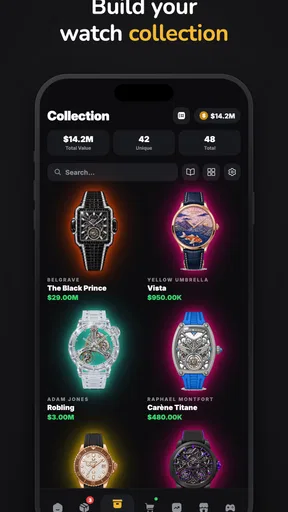
I approached WatchBox: Watch Collector Game as a small, focused card game built around one clear idea: growing a personal watch collection. That narrow theme is its biggest appeal. Instead of asking me to learn a large competitive system or manage a complicated campaign, it gives the experience a collectible identity that is easy to understand from the start.
The game is developed by Yellow Umbrella and is available as a free download for Android users. Its store summary, “Build your watch collection!”, accurately describes the central motivation, while the short store description simply calls it “WatchBox.” I found that simplicity useful: the game presents itself as a collection-driven card experience rather than pretending to be something broader.
It has an average rating of 4.8 from around 1,100 ratings, with more than 60 written reviews, and has passed 10,000 installs. Those figures suggest that the concept has found a receptive audience, although they should not be confused with proof that every collector will enjoy the same pace or style. My impression is that this is best judged as a relaxed hobby game, not as a replacement for a deep strategy card title.
How the collection loop feels in everyday use
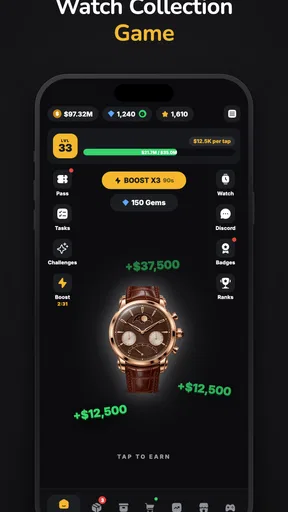
The most enjoyable part of WatchBox is the sense of gradually shaping a collection that feels personal. In a typical short session, I would open the game with one modest goal in mind: check what is available, make a choice, and leave with the feeling that the collection has moved forward. That kind of loop works well when I have only a few minutes and do not want to commit to a long match.
The watch theme also gives the cards more personality than an abstract deck of numbers would have. A collection has visual and emotional value, even when the underlying activity is simple. I found myself thinking less about winning a single encounter and more about whether a new addition fit the direction of the collection I was building. That change in motivation is important because it makes the game feel closer to a digital hobby cabinet than a conventional card battler.
For example, I can imagine playing during a commute or while waiting for an appointment. I would not need to prepare a deck in advance or remember a complicated storyline. I could check the current state of the collection, make a small decision, and stop without feeling that I had abandoned a major objective. That makes the game more practical than many card games that punish interruptions.
There is also a useful psychological distinction between collecting and competing. In a traditional card game, an unsuccessful round can feel like wasted time. In a collection game, even a less exciting session can still contribute to the longer-term goal of organizing and expanding what I own. WatchBox benefits from that softer sense of progress, particularly for players who enjoy completion, comparison, and presentation more than direct competition.
Worth Reading Before You Choose

EA SPORTS FC Mobile 26 Is a Bigger Football Game, but It Takes Time

Flipboard Shows What News Apps Must Do Beyond the Feed

Switching to Android Auto Means Rethinking Your Driving Routine

Google Calendar Makes a Crowded Week Easier to Manage

Ludo King Makes the Most of the Minutes Between Plans

Baby Panda World Brings Quick Play to Modern Phones, but Its Game Library Feels Busy
What the free download really means
The game is free to download, so the initial decision is straightforward: I can try the core experience without paying an entry fee. That matters for a niche theme such as watches because some people will immediately enjoy the idea while others will discover that collecting virtual watches is not enough to hold their attention.
There are in-app purchases listed from $2.99 to $69.99 per item. I would therefore treat the free version as the correct starting point and regard any later spending as optional rather than necessary for deciding whether the game suits me. The wide gap between the smallest and largest listed purchase makes it especially important to pause before buying. A low-cost experiment and a high-cost commitment are very different decisions.
I appreciate that the free access lowers the risk of trying the game, but I would not call the paid value automatically strong merely because the theme is attractive. The value depends on how much I care about expanding a virtual watch collection and how comfortable I am with spending on that hobby. Someone who only wants a quick card game may find that even the lower purchase feels unnecessary.
My practical advice is to play free first, decide whether the collection itself is satisfying, and only then consider a purchase. I would also avoid treating a larger item as a shortcut to enjoyment. If the basic act of collecting does not already feel rewarding, paying more is unlikely to fix that underlying problem.
Where the game delivers value
WatchBox delivers its clearest value through focus. It does not need to compete with every type of card game because it offers a distinct collecting fantasy. The watch subject gives the experience a recognizable identity, and the free entry point makes it easy for curious players to test that identity without making a financial commitment.
I also see value in the game as a low-pressure routine. A collection can become a small daily ritual: open the game, inspect what has changed, decide what deserves attention, and close it. That is different from a game designed around long sessions and constant performance. For a player who likes checking progress in short bursts, this structure can be more appealing than a demanding ranked ladder.
Another strength is the potential for personal goals. I would not limit myself to “collect everything.” More interesting goals might include building a visually coherent set, prioritizing particular kinds of watches, or delaying purchases until an especially appealing addition appears. Even without turning the game into a spreadsheet, setting a personal rule can make the collection feel more deliberate.
This is where WatchBox can offer more value than a generic card game for the right person. The cards are not only tools for a match; they represent objects in a themed collection. If I enjoy cataloging, comparing, or imagining the story behind a collection, that extra layer gives each session a reason to exist beyond the immediate action.
Tradeoffs that affect the experience
The same focus that makes WatchBox distinctive may make it feel limited to players who need constant variety. A watch-collecting theme is specific, and the game does not appear to be aimed at people seeking a broad adventure, a narrative campaign, or a highly competitive tournament environment. If I want dramatic battles, complex deck construction, or a large social scene, a more established card game would probably be a better fit.
The collection-first approach can also make progress feel slower than in games built around frequent rewards. That is not necessarily a flaw, but it changes expectations. I need to enjoy the act of looking after a collection, not merely the excitement of unlocking something new. If every session is judged only by how quickly the next item arrives, the quieter rhythm may become frustrating.
In-app purchases are another tradeoff. Free access is helpful, but the presence of purchases ranging from $2.99 to $69.99 means I would keep a close eye on my own spending habits. The game is easier to recommend as a free pastime than as an open-ended purchase. I would be cautious about buying simply because a collection feels incomplete; that feeling is often the engine of collectible games, and it can encourage spending beyond the original plan.
The age rating is Everyone, which makes the presentation broadly accessible from an age-classification perspective. Still, parents should remember that an Everyone rating does not turn optional purchases into a non-issue. If a child uses the game, I would make the payment expectations clear before handing over the device.
There is also a platform consideration. The listed minimum operating system is Android 7.0, so anyone using an older Android device should check compatibility before planning around the game. The current version is 138.0.0, which indicates that the app has a substantial version history, but a version number alone does not tell me whether every older phone will provide a smooth experience. I would test it on the intended device rather than assume that age compatibility guarantees identical performance.
Small strategies that make collecting more satisfying
My first tip is to choose a collection rule before the game becomes a random accumulation of items. I might focus on visual balance, a particular style, or simply a “one of each type” approach. The rule does not need to be official or complicated. Its purpose is to give decisions meaning when several additions seem equally attractive.
Second, I would separate curiosity from urgency. A new card can feel important because it is new, but that does not mean it deserves immediate spending. I would inspect the collection, consider whether the addition supports my chosen direction, and wait if it does not. This is especially useful in a free-to-start game with optional purchases, because patience helps preserve the value of the no-cost experience.
Third, I would use short sessions intentionally rather than apologizing for them. WatchBox seems better suited to a quick check-in than to forcing a long play period. Opening it during a spare moment, making one considered decision, and leaving can keep the collection enjoyable. Trying to stretch every session may expose the limited scope more quickly.
Finally, I would treat the collection as a personal display rather than a scorecard. That mindset reduces the pressure to chase every possible addition. It also makes the game more durable for me: I am building something with a character, not merely clearing a checklist as fast as possible.
Who is likely to get the most from it
I would recommend WatchBox to players who enjoy collecting games, themed card experiences, and quiet progress. It is a good candidate for someone who likes the idea of building a virtual watch cabinet but does not want a complicated simulation. The free download makes it particularly suitable for curious newcomers who want to explore the idea before deciding whether it deserves regular attention.
It may also suit players who prefer flexible sessions. If I often play on a phone in short intervals, the collection premise gives me a natural stopping point. I do not need to reserve an evening for it, and the experience can fit around ordinary interruptions.
Watch enthusiasts may appreciate the subject more than players who see watches as interchangeable decorations. The theme is doing much of the game’s identity work, so personal interest matters. Someone who already enjoys browsing, comparing, and organizing watches will probably understand the appeal faster than someone looking only for tactical card mechanics.
I would skip it if my priority is a deep competitive system, a large story, or constant action. I would also skip it if collectible purchases tend to make me uncomfortable, unless I am happy to keep the experience strictly within the free portion. A conventional card game may be better for strategic depth, while a dedicated collection or simulation title may be better for detailed management.
My verdict on whether to try or skip
My recommendation is to try WatchBox as a free, low-pressure card game with a very specific collecting hook. The free entry point gives it a fair chance to win me over, and the watch theme separates it from the usual fantasy, battle, and casino-inspired card formats. Its strongest value comes from the feeling of gradually curating something personal.
I would not recommend paying immediately. The listed purchase range, from $2.99 to $69.99 per item, makes it sensible to establish a spending limit before buying anything. If the free experience already gives me satisfaction, a small optional purchase may feel worthwhile; if it does not, a larger purchase would be difficult to justify.
Yellow Umbrella has created a game for a particular kind of player rather than a universal card audience. That is a strength when the theme clicks and a limitation when it does not. With its 4.8 average, more than 10,000 installs, Everyone rating, and Android 7.0 minimum, it is easy enough for many people to test, but the real question is personal: do I enjoy building a watch collection for its own sake?
For me, the answer is yes when I want a calm, collectible routine and no when I am looking for competition or depth. Try it free, set a clear spending boundary, and judge the collection loop before buying. That approach gives the game room to show its strengths without confusing optional spending with genuine value.
Pros
- Relaxing gameplay suited to short sessions
- Large variety of watches to discover and collect
- Simple controls make it accessible for casual players
- Collection progress provides a satisfying sense of completion
- Works well for fans of watch-themed simulation games
Cons
- Gameplay may feel repetitive after extended play
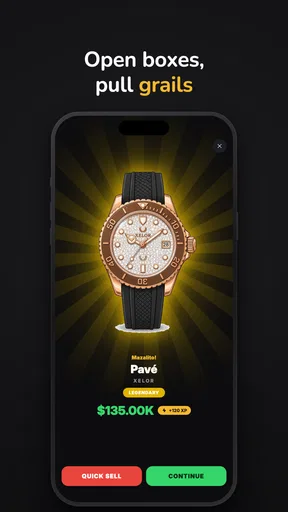
- Some valuable watches can take considerable time to obtain
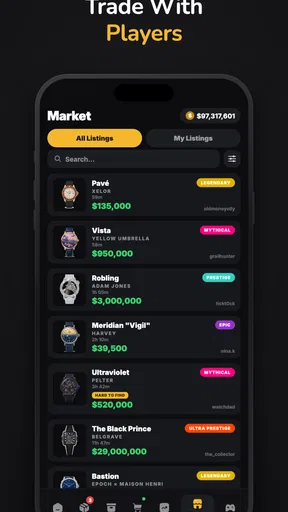
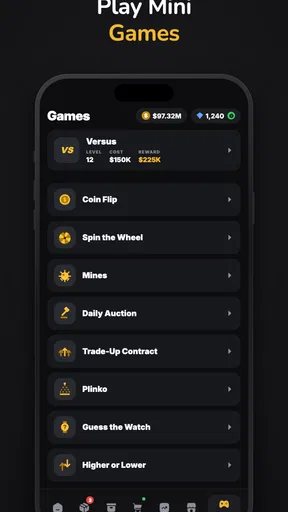
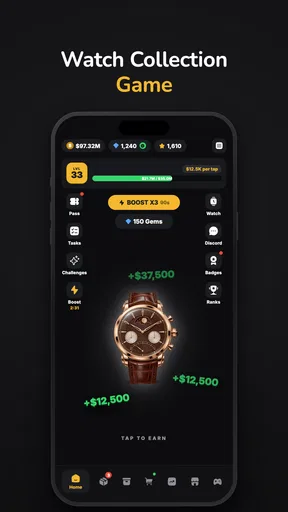
- Limited interaction beyond collecting and upgrading watches
- Progress may depend on frequent check-ins or grinding
- Not ideal for players seeking action or competitive gameplay
FAQs for WatchBox: Watch Collector Game
What is WatchBox: Watch Collector Game?
WatchBox: Watch Collector Game is a collection-focused mobile game built around discovering, organizing, and expanding a virtual watch collection. Players can browse different watch designs, unlock new items, and enjoy the satisfaction of completing sets. It is aimed at users who like collectible games, luxury watch themes, and relaxed progression rather than fast-paced action or complex competitive gameplay.
How do you unlock new watches in WatchBox?
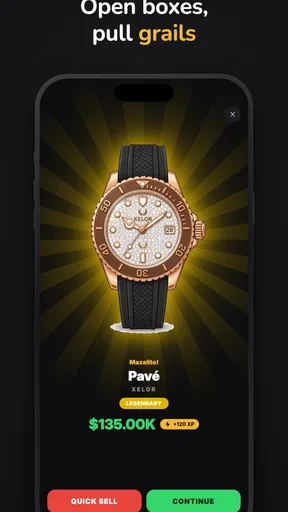
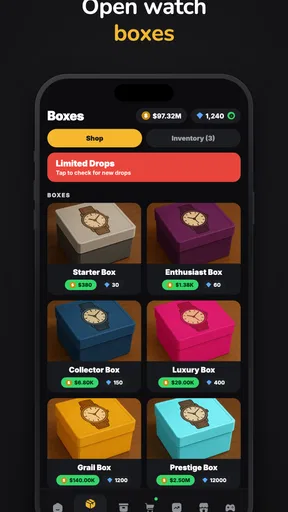
New watches are generally obtained by progressing through the game, completing available objectives, opening collection-related rewards, or using the resources provided during play. The exact options may depend on the current version and game events. Before downloading, remember that some rewards or quicker progression may be connected to optional advertisements, in-app purchases, or limited-time offers.
Is WatchBox: Watch Collector Game free to download and play?
The game can typically be downloaded without an upfront purchase, allowing users to try its main collection features at no initial cost. However, free access may include advertisements, optional purchases, or restrictions on how quickly collections can be expanded. Players should review the store listing for the latest pricing, available bundles, and any subscription or payment details before confirming a purchase.
Does WatchBox require an internet connection?
An internet connection may be needed for certain parts of WatchBox, including downloading updates, displaying advertisements, synchronizing progress, accessing events, or validating purchases. Some basic collection activities might work offline, but this can vary by device and game version. If you plan to play while traveling, test the game with connectivity disabled rather than assuming every feature will remain available.
Is WatchBox suitable for children and casual players?
WatchBox is likely to appeal to casual players who enjoy collecting, browsing attractive watch designs, and making gradual progress without learning complicated controls. Parents should still check the age rating, privacy information, advertising practices, and in-app purchase settings because store ratings and monetization features can change. If children use the app, enabling purchase restrictions is a sensible precaution.


